Take Control of Content Changes Across Your Site

koleary
koleary
M Posted 8 years 9 months ago
t 9 min read

Remember those nights that you spent hours searching for the root cause of that mysterious dip in website traffic of your most valuable pages, only to learn that someone has made changes to the page title and meta description? If you had known this sooner, you could have saved precious time and prevented unnecessary loss to website visits and conversions. What if content changes could be flagged as soon as they’re made? And better yet, what if you could receive alerts about those changes with an email?

Catch changes that may impact website KPIs

To help you better manage content change audits, you need a solution that automatically tracks all content changes on your pages. That is precisely what BrightEdge just released: automated page events.  When on-page factors, such as H1 tag, are changed, the BrightEdge platform will create a page event tag for each of those changes. Any of the page-level trend charts within the BrightEdge platform will have a page event tag. There is also a page-group level overview of these automated page events within the Page Reporting module so you can easily review content change history on the pages that you care about the most.
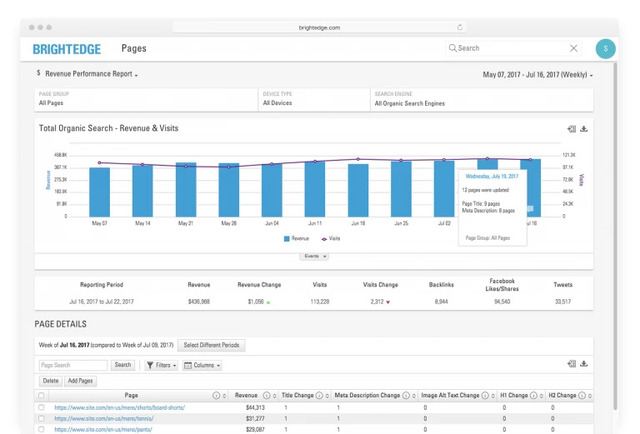
BrighteEdge automated page events in page reporting for content changes 

For example, if your CMS (Content Management System) user accidentally changes the page title of a webinar registration page, (from “Stock trading webinar” to “Futures trading webinar”, for instance), you'll see a corresponding page event tag, once the change is detected. You can also be alerted of these changes, even when you are not logged into the BrightEdge platform.

How to create alerts

BrightEdge Anomaly Detection allows you to set custom alerts based on your needs and goals. Because automated page events are natively integrated with Anomaly Detection, you can create an alert to stay informed, even when you are not logged into BrightEdge. Imagine you are currently working on optimizing a regional section of your domain, such as new landing pages for France. You want to make sure that the content you have developed for those pages keeps its integrity throughout the development process. You can create an Anomaly Detection alert by specifying if the page title is changed for those pages. Then if any page title is changed you will be notified.
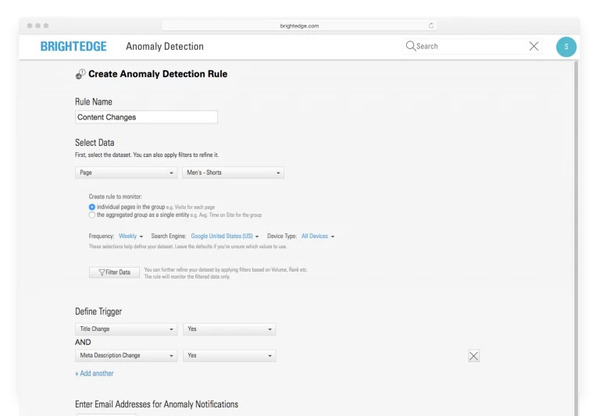
BrightEdge Anomaly Detection for Page Events During Content Changes

Correct content changes to improve site metrics

Once you are aware of a content change, you can triage the issue to determine the best course of action.  If the change is against SEO best practices, then immediately reverse the change. If you do not have access to your CMS,  create a task for your CMS owner or web developer to have them make the change. Once BrightEdge detects that the change has been implemented, you will see a new automated page event within your page-level charts. 

Reduce risky content changes by creating SEO awareness across your organization

Simply being informed of content changes is only one part of the puzzle. Trending a number of changes and correlating their impact to site metrics, such as visitors, conversions, and revenue helps to prove the ROI of SEO. And, help you promote SEO awareness across your entire organization. When more colleagues become SEO savvy, they are likely to become more conscientious of SEO and avoid making content changes that violate SEO best practices in the future. Using BrightEdge StoryBuilder, you can create a trended chart that shows changes relative to site conversions or site visitors. Also, you can create a trended chart to analyze what type of changes are happening more frequently. Or create a chart to help you identify which pages you and your team want to improve on in your content marketing workflow.
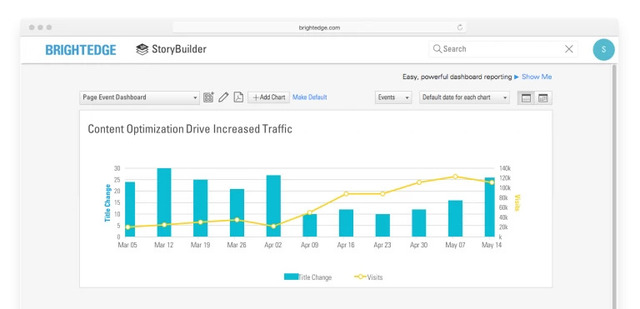
BrightEdge StoryBuilder Report for Site Visits and Content Changes

Get started

So why wait? Automated page events take away the guesswork, and put you in control - catching, correcting and reducing content changes that may jeopardize your hard work in your content marketing efforts. Ready to check out automated page events? Request a demo today!

Share your experience

How do you track content changes? Do you have a system in place to react quickly and make corrections? How do you report on your content optimization successes? We’d love for you to share your best practices with the BrightEdge community. Just include them below in the “Comments” section.


How to Learn Effective SEO Writing

enewton@brightedge.com
M Posted 9 years 11 months ago
t 9 min read

With the growth of the Internet, the entire consumer purchasing process has changed - forcing SEO writing to the forefront of content marketing strategy. An estimated 67 percent of the customer journey now takes place digitally, with 81 percent of shoppers and 94 percent of B2B buyers saying that they conduct Internet research before purchasing a product. Customers use the Internet to learn about brands, products, and services that they might be able to use. They compare options and learn about the various potential solutions to their problems. For companies to succeed with these digital customers, they need to have a strong online presence. It is only by being visible in the channels that customers are using to search - such as organic search or social media - that brands have the ability to establish themselves to prospects. They will then be able to cast themselves as the reputable industry leader from whom consumers should make a purchase.SEO writing process - brightedge SEO writing is a large part of developing that important reputation and brand reach. Strong writing can help organizations improve their ranking within the search algorithms while also being engaging for readers to encourage sharing and interaction.

What is effective SEO writing?

When you sit down to develop an effective piece of textual content, you want to write something that provides immediate value for the reader. It should not just be a regurgitation of everything else on the web. You want to add your own expertise and point of view so that readers have a reason to come back to you specifically to learn more. Your writing should help establish you as a trusted leader within your niche. You should demonstrate a keen insight into the blog topics that matter the most to your intended audience so that you can be there to answer their questions and address their needs. At the same time, your content needs to be developed with the search engine algorithms in mind. The piece needs to clearly communicate to the search engine the topic and value of your material. Google will be looking to understand how your piece fits into the greater digital ecosystem as well as where it fits into your site. This will provide clues and insight about where to display it on the SERPs and for what queries. This means placing carefully-selected, thoroughly-research keywords in certain areas, paying attention to your site structure and taking the time to balance your content with your SEO efforts. Your SEO writing strategy needs to be attentive to effectively communicating both with your target audience and with the search algorithm.

How do I develop effective SEO writing?

  • Step 1: Determine the goal you want to accomplish with this particular piece.

You will not be able to effectively write and engage prospects if you do not know exactly what you want to accomplish with a particular piece of content. You should look at the outline of your ideal customers and their buyer journeys and know how you want this particular piece of content to fit into that funnel. For example, is this piece of content going to be an end-of-funnel piece that encourages people to make a purchase? It might have more product mentions and comparisons about why your brand is superior to competitors. On the other hand, if the content will be for the top of the funnel, it will likely focus more on being informative about the industry and less about your company in particular.  

  • Step 2: Review what others have written about the topic.

Considering that we produce 2.5 quintillion bytes of data every day, the vast majority of the conceivable topics available have been covered to at least some degree. By reviewing what the highest-ranking sites for your particular topic have developed, you will have a better idea of what people want to see when they search for this keyword. You can search for ways to improve upon what has already been created to maximize your potential ranking.

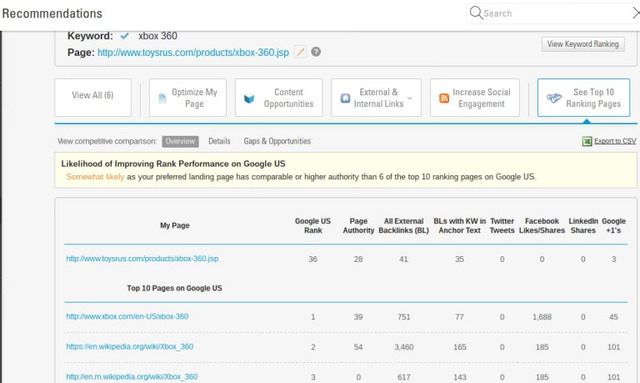
Boost SEO writing with competitive insights on BrightEdge

  • Step 3: Create content that addresses the targeted audience’s need at this particular point in the buyer’s journey.

Once you know whom you are writing for and have an idea about effective strategies that will help you with this topic, it is time to develop the content. Seek to add your own unique perspective to the content so that customers see you as a trusted authority.  

  • Step 4: Be sure to provide depth while also making the content easy to scan.

While you do not want to compromise on the depth of your material, it is important to still make your piece easy to scan. Most people are not going read each word you produce individually, they will quickly look over the material to see how relevant your content is to their needs. You want to pay attention to your headlines and make sure they are clearly relevant to the topic that brought the person to your page. You also want to use listing features, such as bullet points or numbered lists to make your ideas easy to explore and retain. Optimal page word count is now believed to be around 1100.  

  • Step 5: Draft an effective title that draws people into your material.

An estimated 8 in 10 people will read your headlines but not go on to read your content. This gap is because brands do not make their headlines engaging enough. Their headlines do not effectively draw in customers and convince them that this will be the content that answers their needs. Using your keyword in your title helps to communicate your relevance. Using phrases such as ‘how to’, titles that indicate lists or words that otherwise pull in the reader will help you increase clicks. Generally keep your title around 70 characters or below to make sure all the words show up in the SERPs. Long titles that become like title tags can trigger Google to rewrite the title tag for the SERP.  

  • Step 6: Optimize the content with keywords.

Your content should also be optimized with the keyword, but be careful - overuse, also known as ‘keyword stuffing’ - is a damaging SEO writing practice. Instead, aim to have a keyword saturation around one to two percent and make sure that it is always used naturally throughout your piece.  

Although Google has indicated that they do not scan meta descriptions for ranking factors, that does not mean that this feature is obsolete. Meta descriptions influence how many people click through from the SERPs because they help to indicate the relevance of your content to the query. Writing a quality meta description that invites readers in so they can learn your valuable information will improve your clicks, your engagement and stickiness, and therefore your rank.  

  • Step 8: Distribute the content and measure your results.

Once the content has been written and optimized, you then need to distribute it to the people you think will be the most interested in the material. Use a variety of different platforms, such as your social media platforms and your email lists to reach the people most likely to read and engage with the writing. Measure your results throughout the process so that you see how the response of your audience maps to your predictions. Use this information to guide your future content production. Creating an efficient SEO writing strategy and creation process will be the cornerstone of improving your brand reach and creating a strong brand presence. Understanding how to improve your writing will help you boost your online marketing success.  

Content Best Practices

Check out a recent piece on content marketing: A New Era of Content. The paper is based on industry research by BrightEdge and iProspect; it packs a number of content and online marketing best practices into 20 short pages.

,