Core Web Vitals Webinar Q & A

dmcanally
dmcanally
M Posted 5 years 1 month ago
t 9 min read

Last month we hosted a webinar on Core Web Vitals ahead of the Google Page Experience Update scheduled for May, 2021. With nearly 2000 registrations, we were prepared for a lot of questions and knew we likely wouldn’t get to them all. Following the webinar, we reviewed the questions, and felt there were some common themes that would be valuable to address more broadly.

Follow-up question 1: A majority of our visits are on desktop, and we are performing well there; is it still important to improve the mobile Core Web Vitals if most visits are coming from desktop?

There are searches and industries that are mostly driven by desktop queries, which makes it crucial to ensure your desktop experience is sound. We'll get to the Core Web Vital issue, but it’s also important to note that there are other updates happening beyond May’s Page Experience update that will be critical for sites with mostly desktop traffic. For example, Google announced mobile first indexing last year. The thing to keep in mind here is that if you’re serving a different experience, or your desktop experience has more content than mobile, you could risk that additional content not being included in a crawl. So Core Web Vitals aside, if your site is largely desktop-driven, you want to ensure your mobile experience is at least as crawlable as your desktop.

Core Web Vitals is based on browser data. The implication would be that if the majority of users are accessing your site via desktop browsers, then that would be fueling the data the Crux database has on your site. So you could be in a good position. In this case, we encourage you to make sure you’re assessing your site against your competitors with the desktop metrics to see how you’d stack up and that will give you a sense of how the page experience update will impact you. But make sure you’re paying attention to your mobile and desktop content regardless!

Follow-up question 2: Are there any recommendations for improving mobile site speed if the desktop version is already performing well?

We are definitely seeing that mobile pages are the most challenged from a speed perspective, and many BrightEdge clients have indicated the same. One solution could be to implement AMP pages, if you have not already. Accelerated Mobile Pages would provide a faster experience for mobile users that would address many of the challenges facing a slow loading mobile site. There have been some specific advancements with AMP for Core Web Vitals that could be extremely beneficial if your native site has challenges meeting mobile criteria. One common issue AMP pages can help with is if your site is in a sluggish hosting environment. Since AMP pages are cached, this could potentially provide a faster experience and help with issues like LCP. 

There are advantages and disadvantages to implementing something like AMP. If you would like to pursue building out AMP pages, then plan on having your brand and IT teams involved, as there will be design limitations in AMP that may need to be considered.

Follow-up question 3: Is it normal for LCP scores to shift daily?

It depends on where you’re looking. If you are using Page Speed Performance in BrightEdge, or Google’s Page Speed tool, you are essentially testing the performance of that page at that moment. So as you make changes to the page, or as network lags occur, you can expect that metric to drift a bit (and hopefully improve) as you make optimizations. However, it’s important to remember that this is not how Google will be measuring Core Web Vitals. Rather, they’ll be using their Chrome User Experience database which is essentially a 28-day average of these metrics across all the browsers it has captured loading that particular URL. This data is used to generate scores for the website. If you are a BrightEdge Instant customer, you can access this database’s metrics using the Core Web Vitals tab. You should expect this data to remain consistent as it is a monthly average. The workflow we recommend is to use the Core Web Vitals as benchmarks for you and your competitors. Then you can use Page Speed Performance to see if your optimizations are impacting the Core Web Vitals. After a month, run the URLs again in Core Web Vitals to see if the 28-day average has aligned to the optimizations you’ve been making.

Follow-up question 4: Have you seen any problems related to cookie banners and the way they are blocking some script/functionality depending on consent?

This can definitely impact input delay and depending on how the banner is rendered, it will increase the pages cumulative layout shift. Unfortunately, the cookie banners are required for many sites, so we need to be mindful of them. One suggestion is to look at the waterfall of how scripts are loading on your site. Chrome has a resource loading tool you can use to see exactly how this is impacting your site’s overall load time. Depending on where this script appears in the load, it could be blocking other elements of the site from becoming interactive. If you are seeing this happen on your site, then it’s a great opportunity to have a conversation with your Development team to determine a better load sequence that could reduce the input delay.

Follow-up question 5: Do you know if Google will look at a site as a whole (domain and subdomains together) for a ranking 'boost' possibility, or specifically on a URL by URL basis?

What we’ve found, and Google has verified this, is that the Crux database doesn’t have data on many URLs simply because there isn't enough traffic to them to create a statistically significant sample. The view on how this update will roll out continues to evolve, but as of this post, the latest from John Mueller is that Google will be using groups of pages to assess the overall score. This is useful in the sense that product pages that don’t get a lot of traffic may not be in the Crux database, but similar pages of more popular products may have data, and Google can use those to assess how product pages will perform. This also reduces over-reliance on the homepage. 

Knowing this methodology, there are two factors that we can expect to be at play:

  1. Competitors in SERPs -- are you over or underperforming against them?
  2. Do sections of your site consistently return high performance Core Web Vitals?

So it may be possible a specific URL will receive a boost for a specific query because, all things held equal, it delivers a faster experience with the same relevance.

We appreciate everyone who registered and joined us for the webinar and especially those who submitted their questions! If you are already using BrightEdge, we invite you to discuss the Page Experience Update with your Customer Success Manager. And if you are ready to learn more about the BrightEdge platform, please make sure to request a demo with one of our experts!

Five Strategies to Prepare for the Core Web Vitals Update

dmcanally
dmcanally
M Posted 5 years 1 month ago
t 9 min read

One of the most important issues this year facing digital marketers is how to prepare for Google’s upcoming Page Experience Update.This May, Google will begin using three key metrics to help assess the user experience of a given webpage based on actual browser data. The three metrics that are critical for this update include:

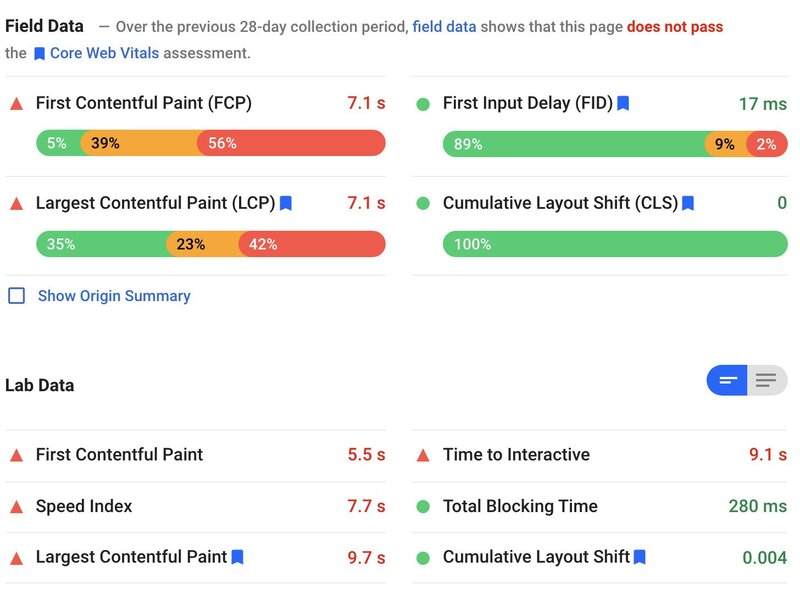
Largest Contentful Paint: This is the time it takes to load the largest visible element of your page (images, videos etc). Google says load times of less than 2.5 seconds for this element are ideal. 

First Input Delay: This is the time it takes for the first interactive element on a page to respond to the user (hitting play on a video, clicking into a link or a drop down menu etc). Google has stated times less than 100 milliseconds is ideal. 

Cumulative Layout Shift: As pieces of a site load, elements of the page will move around as pieces render. This shift in layout can cause people to click on the wrong things and ultimatley provide a poor user experience. This is measured from a score to 0-1. While some layout shift is inevitable, Google has stated less than .1 is ideal. 

DOWNLOAD THE FREE CORE WEB VITALS WEBINAR

Example of FCP, LCP and more - BrightEdge

What will this mean for websites? 

For large companies whose websites have lots of moving parts, it can be challenging to meet these benchmarks without making drastic changes to their entire infrastructure. Sitewide changes involves multiple stakeholders, conflicting business priorities and often lead to sizable projects. To be successful in preparing for this update, digital marketers need compelling data and very prescriptive prioritization in order to sell requirements into their organization. 

Here are five key strategies that can help you address the core web vitals of your website and justify the implementation work needed.

  1. Assess how your segment is doing
  2. Evaluate your infrastructure
  3. Use Log File Analysis as a priority guide
  4. Build a holistic fallover plan
  5. Use a combination of micro and macro trends to forecast overall impact

1. Assess how your segment is doing

It’s critical you keep a pulse on this for your own web properties. But you also need to understand your landscape. It can be difficult to scale measuring multiple URLs if you’re only using things like Google’s Page Speed Insight Tool. Tools like Brightedge Instant enable users to look at batches of URLs and compare their performancees. If they measure URLs with the top share of voice in a keyword group and run the page speed test on them, they have an instant readout of what competitors are vulnerable and where they have opportunity. Some ways to use this approach include: 

  • Brand Protection: Get a high level view of how sensitive your branded searches are to changes in May by assessing the core web vitals of the top brands. 
  • Striking Distance Keywords: Build a keyword group by using Data Cube to see which keywords are on page 2. Use the Share of Voice report to aggregate the top URLs to help your company understand what could be gained or lost for terms you’re almost on the first page for. 
  • Product level keywords: Build and measure URLs that dominate key product categories. Pinpointing which of these categories are going to be sensitive to the Page Experience Update in May will help you put the context of the update in business impact. This can help your organization understand what the visibility fluctuations could mean for customers looking for your products. 

2. Evaluate your infrastructure

There are a range of issues that could cause metrics like first input delay to be slow. You should be able to address many of these through common code optimization techniques. If pages are built on custom apps or content management systems that require multiple javascripts to render content, you may need to seek other ways to help your site meet performance benchmarks.  

How your site is hosted, and its total infrastructure can have an impact on how well it serves content. In addition to evaluating on-page factors and loading aspects specific to a page, consider how your site it hosted, what platforms it is built on and so forth. These may be big overhauls but if you’ve got data to show how significant it could impact the channel, it may be worth it. 

3. Use Log File Analysis as a priority guide

One of the most common challenges with enterprise websites, is they feature legacy code, and elements that are no longer in service. Log files can help marketers see what aspects of the site may be particularly prone to slowing down load times reducing the sites ability to react quickly to user input. SEO’s typically use log file analyzers to get a birds eye view into how crawlers are getting through the site. This same principle can help you address contentful paint and input delay issues at scale. While Google has stated this measurement is driven by browser data, the experiences crawlers have on the site can offer invaluable data points to prioritize how to optimize your site’s experience. Some examples of how log file analysis can help marketers prepare for the Core Vitals update:

  • Identify which parts of your site are likely to be prone to core web vital issues and why
  • Sense and help forecast what gains could be hindered by a poor page experience using log file analysis
  • Pinpoint what files need compression help at scale
  • Fuel automated optimization services

Once you are aware of these issues, there are scaled ways to address them. For example, Brightedge’s AutoPilot compresses images automatically, eliminating this as a task. 

4. Build a holistic failover plan

If you’ve used share of voice reporting to identify which of your search results are prone to fluctuations in May during the Page Experience Update, you have a critical collaboration point for your media teams. If you anticipate having some vulnerabilities when the update rolls out, it may be wise to lean on paid search to help run air cover while you implement. 

  • Create paid keyword campaigns designed to provide coverage where you anticipate ranking loss
  • Build proactive conquesting campaigns for keyword groups where organic search results are particularly sensitive
  • If you’re using BrightEdge Daily Pulse, it can serve as your virtual war room in the month of May to see what needs to be turned on/off

5. Use a combination of micro and macro trends to forecast overall impact

Measuring trends on both a macro and a daily level not only help you understand where those may be, but they can also help you anticipate what opportunities you could realize by meeting the Core Vitals Benchmarks. For example, Brightedge users that are using Market Insights can see at a high level what behavioral trends are fueling search behavior. This insight fuels things like content strategy, but when coupled with tools like Search console and page speed inisghts on the leaders in each space, it is now possible to forecast and predict what content is likely to be displaced at scale. For Brightedge customers, Daily Pulse makes it simple to visualize how positions are shifting leading up to the rollout, and even pinpoint when it occurs on results that matter to your business.  

We can expect Google’s Page Experience update in May to have significant impacts on the organic channel as a whole. It is important to be armed with the right data and the right tactics to pivot and adjust. Even if your website is meeting the benchmarks, you can use this as an opportunity to pinpoint where you need to focus to generate positive traction. If you’re interested to learn more about how Brightedge’s suite of enterprise technology could help your business navigate things like the May Page Experience Update, please reach out and we can set up a demo today.

,