Baidu: What You Need To Know for SEO Success in China

If you want to successfully use digital marketing in China, you must become intimately familiar with Baidu: the leading Chinese international search engine. Baidu commands 68.5% of the search market in China, with its next largest competitor, known as ‘360 Search,’ falling far behind at 14.2%.
Baidu itself is a tech company that moved in on search early. It adopted many of its initial ideas from Google, but quickly began to differentiate itself. It focuses solely on the Chinese language, which has given it space to nurture its understanding of Simplified Chinese. It grew in popularity because of its superior ability to understand Chinese text and thus deliver quality results for Chinese users.
Baidu has several web properties outside of the search engine. It offers services, such as travel sites, music platforms, translation services, and much more to its users, with these web properties often prominently featured on the search results pages. Baidu is investing heavily in AI and autonomous cars.
If you want to learn more about how to succeed with SEO for Baidu and expand your business into China, here is what you might find similar and different when venturing onto the Chinese search engine.
What will look familiar with SEO for Baidu
When you first started learning about SEO in the West, you likely explored features, such as the site meta data, the architecture of the site, and understanding canonical URLs. These features should also be used for content and SEO for Baidu.
Keep in mind, however, that while they might look similar, the search engine likely weighs them differently. For example, although Google only uses meta descriptions on the SERP and they do not directly impact rankings, SEO for Baidu does consider the content in the meta description.
Mobile should also play a prominent role in your SEO for Baidu. Google, and the other major western search engines, have placed a larger emphasis on mobile devices in recent years, particularly with the introduction of the mobile-first algorithm. In China, however, mobile devices have dominated the scene for a while. This means mobile optimization has been built into the algorithm. The Chinese search giant even has its own version of AMP, known as MIP or mobile instant pages.
Similarly, Baidu also places a large emphasis on rooting out duplicate content and may punish it even more harshly than Google. Western SEOs should already know the importance of creating original, valuable content for users, but when performing SEO for Baidu it needs to take even a higher precedent.
Baidu also announced a few years ago that they would include HTTPS as a ranking signal, and professionals have noticed a greater security emphasis on SEO for Baidu results since about 2016. Setting up any Chinese sites as HTTPS should therefore be a priority.
Finally, SEO for Baidu used to have a reputation for not being as good as Google in its ability to understand links, but this has changed over the past few years. They have improved their ability to understand the links pointing to your site, so do not neglect your link-cultivation strategies you use elsewhere.
Differences with SEO for Baidu
Once you get deeper into the idea of SEO for Baidu, you will find that the Chinese search engine differentiates itself in many ways. In addition to these similarities, there are also a number of differences that SEOs must consider.
Censorship
At the forefront, you need to keep the Chinese state-censorship in mind. Anyone running a business out of China, including running a Chinese site, needs to make sure they familiarize themselves with the laws and regulations pertaining to their business and content they distribute. Verify that your website does not contain anything that might trigger the communication regulations.
Chinese emphasis
Remember also that this search engine has been built specifically for people in China. This means that they deal only with content written in Chinese. You want to work with a native speaker whenever possible for translation. Baidu’s webmasters tools are not available in English and Baidu places a big emphasis on the quality of the content. Poor translations of material will receive a flag as poor-quality content. Note that Baidu also prefers Simplified Chinese script over Traditional.
When you implement SEO for Baidu, remember that Baidu will have a strong bias towards anything Chinese. This means that site owners need to pay attention to all elements of their site and opt for a Chinese version when possible. This includes:
- The site domain
- The business address on the site
- The server location
- The citations
- The links for the site
Baidu does have good reasons for this preference. Although Baidu dominates within China itself, that is also the main source of its traffic. The search engine knows that the vast majority of its customers come from mainland China. Focusing SEO for Baidu on businesses that invest in serving the Chinese population will provide its users with a better experience.
Differences in the SERP appearance
The Baidu SERP also contains some differences that separate it from Google. One of the first things new users will notice is the prominence of images. Nearly every search will contain some images and most organic results will have thumbnails with them. Brands need to therefore pay close attention to the images they include on their sites.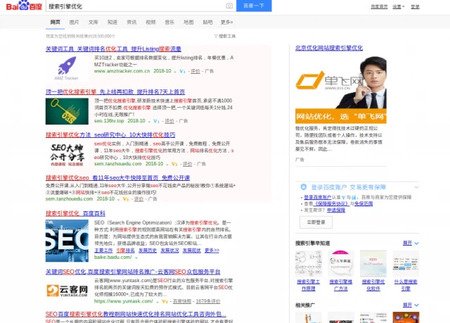
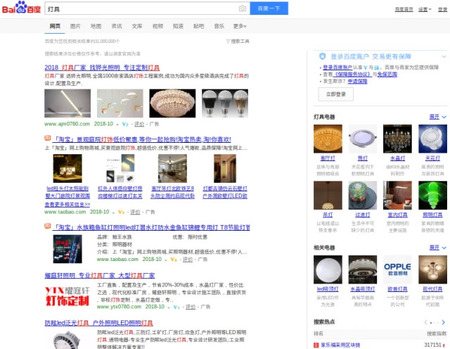
Baidu also prominently features its own properties on the snippets and ads on the SERP to a degree that would seem excessive to most in the West. It can also be even harder to distinguish between paid and organic results on Baidu compared to Google.
SEO success on a global scale requires understanding local search engines and needs. Although many countries also use Google to a large degree, China differentiates itself through its popular and prominent Baidu. Brands that want to build their Chinese audience will need to understand how to optimize their material for this platform. Consider how you can start to employ some of these strategies and tips moving forward to prepare your site for Chinese SEO.