Building Engagement with Keyword Awareness


As a valuable strategy for marketers, keyword awareness can boost a site's flow of organic traffic as well as engagement metrics.
A few months ago, I was returning from a concert when I noticed a small flier placed on my car window, which read "If you enjoyed this event, lookup [artist name] on Google". It was an ad for another concert organized by the same company whose event I had just attended.
I ended up searching for [artist name] as per the flier on Google a few days later to look for tickets and found myself clicking on the management company's website. While clicking around the site and learning more about their upcoming events, the strategy from a marketing standpoint intrigued me.
The flier was essentially a way to explicitly build keyword awareness, that when searched, would lead to more traffic on the company's website - a feedback loop to generate repeat customers. By encouraging people to research a particular term that they already ranked highly for, the company was able to secure the organic traffic and build engagement. This untapped strategy can build brand awareness and boost engagement metrics for companies that employ it.
Understanding the role of awareness in brand promotion
We understand brand awareness to be the likelihood that consumers recognize the existence and availability of a brand's product or service. Keyword awareness could be similarly described as the likelihood that consumers recognize the existence of search terms. When terms enter the vocabulary of those familiar with a particular topic or industry, they become more likely to use these phrases in their searches, thus increasing the traffic for those sites that were already optimized for the topics.
Marketers can use keyword awareness to drive up their organic search traffic. Similar to the experience above, brands can suggest keywords and promote different terms to particularly receptive audiences and begin to build themselves a strong audience for their particular areas of expertise.
When you build keywords in the minds of consumers, you can help influence both current and future behaviors. For example, if someone sees a list of related search terms on your site, even if they do not choose to click on one right now, they have a higher chance of remembering that term in the future and using it to search. When you rank highly for this term as well, the search will lead them back to your site, helping you to further build your relationship.
Before you can build keyword awareness, however, you have to have an understanding of which terms will align with your target audience's needs. If you're still trying evaluate which related topics will resonate, try our free 30-minute webinar on 3 Steps to Boost Content Marketing Results.
Building keyword awareness
One way to build keyword awareness is to publicize the high-ranking keywords via your product recommendation engine. Typical product recommendation engines calculate the likelihood of a product attracting a visitor’s attention by computing a likability score for related products and ranking them. This is done through a mathematical indexing formula that takes into account the browsing behaviors of other users.
In addition to the browsing behaviors, if the product likability score is made a function of organic keyword search volumes and ranking, marketers could have recommendations that are influenced not just by product likability but also search engine optimized content. In addition, publishing the list of keywords as a social proof-- for example, listing current popular search terms-- reinforces these keywords in the visitors’ minds, thereby creating an organic traffic feedback loop.
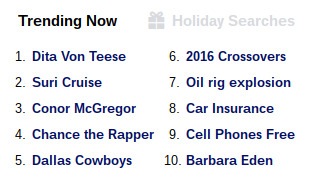
A strong keyword awareness campaign can encourage people to visit your site while also boosting the engagement of those who have already landed on your page. Linking to related topics will encourage people to explore more material, keeping them on your page and laying the foundation for a strong relationship.
Improving engagement on your website serves a critical purpose in encouraging more prospects to enter your sales funnel. Customers today are inundated with content and information from a variety of different sources. Experts believe the digital ecosystem will grow from 130 exabytes to 40,000 exabytes by 2020. While the growth in digital usage is beneficial for customers, this means also that brands will have to compete even harder for attention.
Building engagement on your platform will boost your brand recognition and reputation. It lays the foundation for your relationship with the prospect, demonstrating that you can answer their questions and address their needs. Strong engagement metrics can also boost your ranking on the SERPs and encourage more people to enter your sales funnel.
Building keyword awareness and demand with BrightEdge
BrightEdge is a powerful tool that will help you find the right keywords to capitalize on, empowering you to raise awareness for visitors and build the positive feedback loops.
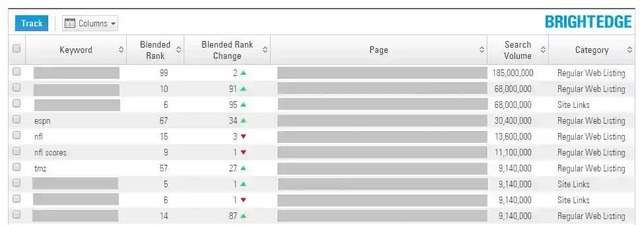
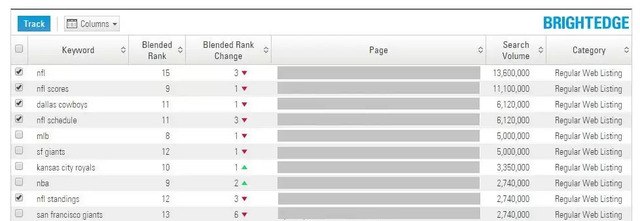
- Using the BrightEdge API, you can easily pull your top ranking keywords, search volumes and other SEO metrics, out of the BrightEdge platform. This will let you see the terms for which you regularly rank highly.
- Monitor and measure the search volume and the ranking URLs to better understand the keywords that will be the focus of your keyword awareness campaign. See our on-demand BrightEdge API webinar.
- Create a site recommendation engine that uses the data pulled out of the BrightEdge platform, to help bolster your target keywords while using social proof to boost interest in the terms. Link people to content that is likely to interest them, encouraging them to explore more terms and the topics where you excel.
- Use A/B testing to further optimize your recommendations. Look at a variety of KPIs including how well the recommendations boost engagement, encourage people to enter the sales funnel, and result in repeat customers.
Keyword awareness and demand can be an important part of building an online strategy. By interesting people in your terms and topics, you can encourage them to engage with your brand through your website. Used correctly, it will boost your traffic arriving from organic search engines and it will encourage people to remain on your site longer.